

 English
 中文简体
中文简体


Home · News · Industry News · How Does an Intelligent Booster Pump Adapt to Changing Water Demand
Industry News
How Does an Intelligent Booster Pump Adapt to Changing Water Demand
2026-09-18Water demand rarely stays at one level throughout a normal day. A single outlet may require only a small amount of water, while several outlets can be used at the same time. The pressure required at different points in a water system can also change as people open or close taps, use showers, or operate water-consuming equipment.
A fixed operating condition may therefore not suit every stage of water use. An Intelligent Booster Pump can respond to these changes by adjusting its operating state according to the conditions within the water system. This approach connects pump operation more closely with actual demand rather than treating every water-use situation in the same way.
The way a booster system responds depends on several factors, including flow demand, pressure requirements, pump type, water temperature, environmental conditions, and pipe arrangement. Looking at these factors together helps explain how intelligent pressure boosting fits into different water supply systems.
Why Does Water Demand Change During Daily Pump Operation
Water demand changes because water outlets are rarely used in exactly the same way throughout the day. A bathroom shower, kitchen tap, washing equipment, and other outlets may operate separately or at the same time. Each situation places a different demand on the supply system.
When only one outlet is open, the required flow may be relatively limited. When several outlets operate together, the system has to provide water to more locations at the same time. Once some outlets close, the demand falls again.
These changes can affect both flow and pressure. A pump that operates at one fixed condition may therefore experience different working requirements as water use changes.
Several factors can contribute to changing demand:
- The number of outlets being used
- The opening position of a tap or valve
- Changes between low-flow and higher-flow use
- Differences between upper and lower water outlets
- Variations in household or facility activity
- Changes in water use between different operating periods
The important point is that water demand is a moving condition rather than a single fixed requirement. A suitable pumping arrangement needs to account for that variation when determining how the equipment should operate.
How Does an Intelligent Booster Pump Respond to Flow Changes
An Intelligent Booster Pump is designed around the relationship between actual water demand and pump operation. When demand changes, the operating condition can change with it rather than remaining fixed regardless of what is happening in the water system.
For example, when several outlets are open, the system may require a greater flow. When some outlets close, the demand decreases. The control system can respond to these changes so that pump operation corresponds more closely with the current requirement.
This response is particularly relevant in systems where water use changes repeatedly. Instead of viewing the pump as a device that simply runs whenever water is required, it can be considered part of a wider pressure-control process.
The operating sequence can be viewed in a simple way:
Water demand changes → system conditions change → control responds → pump operation adjusts
This relationship also helps explain why automatic control matters. The pump does not need to operate in exactly the same manner when water demand is low and when several outlets require water simultaneously.
Pressure conditions are also connected to this process. If demand increases, the water system may need additional pumping support. If demand falls, continued operation under the same conditions may not be necessary.
The response is therefore not only about increasing water flow. It is about matching pump behavior with the changing requirements of the connected system.
How Does Variable Speed Control Affect Pressure Stability
Variable speed control provides a way to adjust pump operation as water demand changes. Instead of keeping the pump at one operating speed under different conditions, the system can change the running state in response to the water requirement.
This can be useful because pressure demand is not always constant. Consider a system where one outlet is operating and another outlet is opened. The required flow changes, and the pump may need to respond differently. When the second outlet is closed again, the requirement changes once more.
The relationship between speed and demand can be considered through several operating situations:
| Water use condition | Change in system demand | Possible pump response |
|---|---|---|
| Limited water use | Lower flow requirement | Reduced operating condition |
| Several outlets open | Greater flow requirement | Increased operating condition |
| Some outlets close | Demand decreases | Operation adjusts downward |
| Water use stops | No active flow requirement | Pump moves toward standby |
Variable speed control does not remove the need to select an appropriate pump or design the water system correctly. Instead, it provides an operating method that can respond to changing conditions.
Pressure stability also depends on the pipe network, water source, outlet arrangement, and other system factors. The control function should therefore be considered as one part of the complete water supply arrangement.
This is where an Intelligent Booster Pump differs conceptually from a pump that simply operates at a fixed condition. Its role includes responding to the relationship between water use and system pressure rather than treating every operating situation alike.
When Does a Centrifugal Booster Pump Need Variable Speed Control
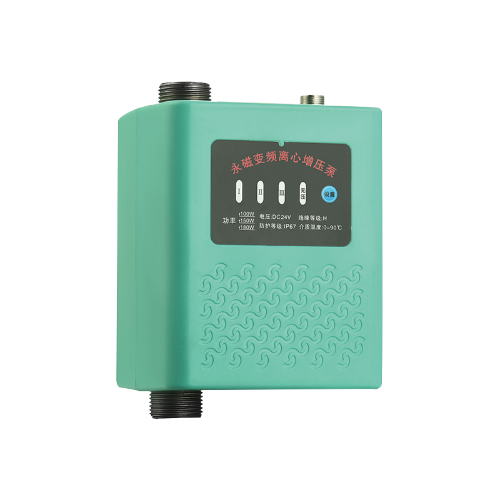
A centrifugal booster pump may be used where water needs to be moved through a supply system while additional pressure is required. When demand changes frequently, the operating condition of the pump becomes an important consideration.
A variable speed arrangement can be relevant when the system moves between different flow requirements. For example, a residential water system may have periods when only one outlet is active and other periods when several outlets are used together. Similar changes can occur in buildings or facilities where water use varies between different areas.
The selection of the pump should therefore begin with the water system rather than with the pump alone.
Questions worth considering include:
- How many outlets may operate together?
- Does water demand change significantly during use?
- Is pressure expected to remain relatively stable across different flow conditions?
- What pipe arrangement connects the pump with the outlets?
- Does the system require automatic changes in pump operation?
A centrifugal pump with variable speed control can be integrated into such conditions when its operating range corresponds with the requirements of the water system.
The intelligent variable speed centrifugal booster pump can therefore be presented in the context of changing demand rather than as a separate product feature. Its relevance comes from the way variable-speed operation connects pump behavior with changes in water use.
How Can an Intelligent Booster Pump Handle Cold Water Conditions
Water temperature introduces another consideration that is separate from flow demand. In a mild environment, temperature may have limited influence on everyday operation. In colder surroundings, however, the condition of water and connected piping requires greater attention.
Low temperatures can affect water supply equipment and exposed sections of a system. The concern is not simply whether the pump can move water. The surrounding installation conditions also need to be considered.
For systems exposed to colder conditions, attention may be given to:
- The location of the pumping equipment
- Exposure of connected piping
- Protection against freezing conditions
- Changes in water temperature
- Operating conditions during periods of limited water use
- The relationship between the pump and the surrounding water system
The meaning of "cold water" can also vary. Water may be intentionally supplied at a low temperature, or the entire system may be operating in a cold environment. These are different conditions and should not automatically be treated as the same requirement.
An Intelligent Booster Pump used in such a setting needs to be considered together with the environmental conditions around it. Automatic operation alone does not determine how a system responds to cold conditions. Installation, pipe exposure, water temperature, and the intended operating environment all have a role.
What Changes When One Pump Handles Hot and Cold Water
Hot and cold water applications introduce different operating considerations. Water temperature affects the conditions under which pumping equipment operates, while the surrounding environment can create additional requirements for the installation.
A system supplying cold water may have one set of operating conditions, while a system handling warmer water may require different consideration of materials, connections, temperature range, and operating conditions. The same pump arrangement should not automatically be assumed to suit every temperature-related application.
Where a system needs to address both hot and cold water conditions, the following questions become relevant:
| Consideration | Cold water use | Hot water use |
|---|---|---|
| Water temperature | Lower operating temperature | Higher operating temperature |
| Environmental concern | Greater attention in cold surroundings | Greater attention to heat exposure |
| System condition | Depends on source and installation | Depends on water source and intended use |
| Pump selection | Consider temperature and system requirements | Consider temperature and compatible operating conditions |
| Installation | Consider exposure to cold conditions | Consider exposure to heat |
For equipment intended to support hot and cold water applications, the water temperature should be considered alongside the pump's intended operating conditions.
A smart antifreeze hot and cold water booster pump can be relevant where both temperature variation and pressure boosting form part of the system requirements. Its position in the system should still be determined by the actual water source, pipe arrangement, temperature conditions, and expected demand.
The antifreeze aspect is particularly relevant where cold environmental conditions may affect the water system. It should be considered as part of the complete installation rather than as an isolated pump function.
Which Factors Matter When Selecting an Intelligent Booster Pump
Selecting a pump starts with defining the conditions it needs to handle. Flow and pressure are important, but they are not the only considerations. The surrounding water system determines how the equipment needs to operate.
A practical assessment can begin with the following areas:
- Water demand: Identify how many outlets may operate and how demand changes during use.
- Pressure requirement: Consider the pressure needed at the relevant water outlets.
- Building arrangement: Account for differences in elevation and the position of water-consuming areas.
- Pipe layout: Consider pipe length, routing, connections, and restrictions within the system.
- Water temperature: Establish whether the system handles cold water, warm water, or changing temperatures.
- Environmental conditions: Consider whether the equipment or piping is exposed to cold surroundings.
- Operating pattern: Determine whether demand changes frequently or remains relatively consistent.
- Control method: Decide whether automatic or variable-speed operation is appropriate for the system.
These factors should be assessed together. Choosing equipment based on only one condition can create a mismatch between the pump and the actual water system.
For example, a system with changing demand may require a different operating approach from one with relatively stable demand. Similarly, a system exposed to cold conditions needs different consideration from an indoor installation with stable temperatures.
The purpose of the selection process is therefore to establish a clear connection between the water system and the operating conditions expected from the pump.
How Should an Intelligent Booster Pump Fit the Water System
The final consideration is how the pump interacts with the complete water supply arrangement. Pump operation does not take place independently. Water enters through the supply side, passes through connected piping, and reaches the outlets according to the layout and operating conditions of the system.
Installation position can influence how the equipment receives and delivers water. Pipe arrangement can affect flow conditions. The number and location of outlets can influence demand. Temperature and environmental exposure can introduce additional requirements.
A properly considered system therefore brings several elements together:
Water source → inlet arrangement → booster pump → outlet piping → water-use points
Each part has a relationship with the others. If the pump is selected without considering the pipe system, the expected operating condition may not correspond with actual use. If water demand changes substantially but the control approach remains fixed, pressure behavior may also differ from expectations.
For this reason, an Intelligent Booster Pump should be viewed as part of the complete water supply system. Its ability to adjust operation is meaningful when the pump type, control method, water demand, pipe arrangement, installation conditions, and temperature requirements are considered together.
This system-based approach also makes it easier to distinguish between different applications. A variable-speed centrifugal arrangement may suit a system where flow demand changes regularly, while a pump intended for hot and cold water conditions may require greater attention to temperature and environmental factors. The appropriate configuration depends on the conditions that the water system actually presents.
Contact Us
Your email address will not be published. Required field are marked*

- Tel: +86-0576-89933666
- Mob: +86-18608118888
- FAX: +86-0576-89933668
- Email: [email protected]
- Add: Building 13, Zeguo Electronmechaical Entrepreneurship Park, Wenling City, Zhejiang Province, China
Please contact us and look forward to happy cooperation with you.
Copyright © Taizhou Shanying Pump Co., Ltd. All Rights Reserved.
 China Pump Supplier

