

 English
 中文简体
中文简体


Home · News · Industry News · How Does a Shielded Motor Pump Handle Demanding Fluid Systems
Industry News
How Does a Shielded Motor Pump Handle Demanding Fluid Systems
2026-09-11Fluid handling systems often have to operate under changing conditions. The liquid may vary in temperature or viscosity, while piping conditions can affect how smoothly it reaches the pump. Air entering the system, restricted circulation, and unsuitable operating conditions can also change the way equipment behaves during normal use.
A Shielded Motor Pump is designed around a compact motor and pump arrangement in which the motor operates within the pump assembly. This construction is relevant to systems where fluid circulation, equipment space, and leakage control need to be considered together. Its operation, however, still depends on the conditions surrounding the unit.
Looking at the pump as part of the complete fluid system makes its operating requirements easier to assess. Fluid properties, circulation, piping arrangement, heat transfer, and operating practices can all influence the result. These factors also provide useful points of reference when selecting, installing, or checking a unit for routine service.
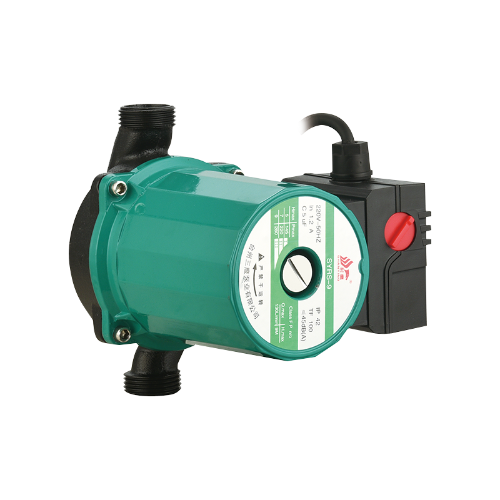
How Does a Shielded Motor Pump Work Within a Fluid System
A pump does not operate separately from the rest of a fluid circuit. It receives liquid through the inlet side, transfers energy to the fluid, and moves it toward the discharge side. At the same time, the motor provides the mechanical energy needed to maintain circulation.
In a shielded construction, the motor and pump are arranged as an integrated assembly. The rotating components operate within the enclosed pump structure rather than relying on an exposed shaft passing through a conventional external sealing point. The liquid inside the assembly can also play a role in carrying heat away from internal components, depending on the design.
This arrangement affects how the equipment should be viewed during operation. Several conditions need to remain compatible:
- The liquid must be able to circulate through the intended flow path.
- The operating environment must suit the motor and pump construction.
- The inlet side needs to provide a stable supply of liquid.
- The discharge system should not create unnecessary resistance.
- The unit should not be expected to operate outside its intended conditions.
The relationship between these factors becomes clearer when fluid properties are considered individually. Temperature and viscosity, for example, can change how easily a liquid moves through the system. Piping conditions can then add another layer of resistance.
Rather than treating pump capacity as an isolated characteristic, system conditions should therefore be considered alongside the equipment itself.
How Does Fluid Temperature Affect Shielded Motor Pump Operation
Temperature can influence both the liquid and the equipment surrounding it. As a liquid becomes warmer or cooler, its physical behavior may change. Some liquids become less resistant to movement as temperature rises, while others can present different handling conditions depending on their composition.
Temperature also matters because the fluid may pass through areas surrounding internal motor components. Heat generated during operation needs to be managed within the assembly and transferred through appropriate paths. If the liquid cannot circulate as intended, heat removal can become less effective.
For this reason, temperature should be considered at several points rather than only at the pump inlet. A system may experience temperature differences between storage, piping, and the point where the liquid enters the equipment.
| Temperature-related condition | Possible operating consideration |
|---|---|
| Changing liquid temperature | Fluid behavior may change during operation |
| Warmer process liquid | Heat transfer conditions may become more important |
| Cooler liquid | Viscosity may increase for some fluids |
| Uneven temperature within the system | Circulation conditions may become less consistent |
Material compatibility is another consideration. Components that remain in contact with the fluid need to suit the temperature and chemical conditions of the application. The surrounding system should be evaluated in the same way rather than focusing on the pump alone.
A temperature change does not automatically indicate a problem. What matters is whether the actual operating condition remains within the intended range of the equipment and the fluid system.
How Does Fluid Viscosity Change Shielded Motor Pump Performance
Viscosity describes how readily a liquid flows. Water-like liquids generally move differently from thicker fluids, and this difference can affect pump operation.
When viscosity increases, the pump may encounter greater resistance while moving the fluid. Flow can become more difficult, and the motor may have to work under a different load. A fluid that behaves well under one temperature condition may therefore behave differently after its temperature changes.
This is particularly relevant when the equipment is used for liquids that do not have a stable viscosity during the full operating cycle. Heating, cooling, mixing, or changes in the process can alter the fluid's resistance to movement.
The relationship can be considered through several practical questions:
- Does the fluid remain at a similar consistency throughout operation
- Can temperature changes alter its flow behavior
- Does the piping create additional resistance for the fluid
- Does the selected pump arrangement match the expected circulation conditions
Viscosity should also be considered together with the inlet condition. A thick liquid moving slowly through a restrictive inlet may create a very different operating situation from a thinner liquid supplied through a free-flowing line.
Consequently, choosing equipment based only on the desired movement of liquid can overlook conditions that appear later during operation. Fluid characteristics need to be considered alongside the intended flow path.
Why Can Air Entrapment Affect Shielded Motor Pump Operation
A liquid circulation system generally relies on a continuous supply of fluid. When air enters the flow path, that continuity can be disturbed.
Air may enter through an unsuitable connection, an imperfectly filled system, an inlet condition that allows air to be drawn inward, or changes during maintenance. Once present, it can move through the piping and reach the pump assembly.
The effect can vary according to the system design. Possible signs include irregular flow, unusual operating sounds, vibration, or a noticeable change in circulation. In some situations, the equipment may struggle to maintain the expected movement of liquid.
The inlet side deserves particular attention because the pump depends on a stable liquid supply. A connection that appears secure from the outside may still contribute to an unstable flow condition if the surrounding piping arrangement is unsuitable.
Air-related issues can also be confused with other problems. For example, irregular flow may result from a partially restricted line, a change in fluid properties, or an operating condition that does not match the system requirements.
A practical inspection should therefore consider the complete flow path instead of assuming that the pump itself is the source of the problem.
What Causes Overheating in a Shielded Motor Pump
Overheating can occur when heat generated during operation cannot be transferred away effectively. The cause may involve the fluid, circulation conditions, operating state, or surrounding installation.
One possible factor is insufficient liquid movement through areas intended to support heat transfer. If circulation is interrupted or significantly reduced, the equipment may no longer dissipate heat in the same way as it would under normal flow conditions.
Other situations can also contribute to excessive heat:
- Operation without an adequate liquid supply
- Restricted flow through the system
- Air within the circulation path
- Fluid conditions that differ substantially from the intended application
- Excessive resistance within connected piping
- Operating conditions that place an unusual load on the motor
Temperature should be assessed together with other signs rather than treated as an isolated reading. A change in sound, vibration, flow, or operating behavior may provide useful context.
If overheating occurs repeatedly, simply allowing the equipment to cool and restarting it may not address the underlying condition. The surrounding system should be checked for changes in fluid supply, piping resistance, air entry, and circulation.
This approach is also useful for distinguishing a temporary operating disturbance from a recurring system condition.
How Does Piping Design Affect Shielded Motor Pump Performance
Piping determines how liquid reaches the equipment and where it goes afterward. Even when the pump itself is operating normally, an unsuitable pipe arrangement can affect circulation.
The inlet side is particularly important. Excessive resistance, unnecessary bends, restrictive connections, or an unstable liquid supply can make it harder for the pump to receive fluid consistently. The discharge side can also influence the operating point by adding resistance to the flow path.
Installation position matters as well. The equipment should be placed in a way that supports the intended movement of liquid and allows routine inspection. Connections should be properly aligned so that external forces are not unnecessarily transferred to the pump housing.
| Piping consideration | Why it matters |
|---|---|
| Inlet arrangement | Influences the stability of liquid entering the unit |
| Pipe resistance | Affects the effort required to move fluid |
| Bends and connections | Can change the flow path and add resistance |
| Installation position | Influences access and liquid circulation |
| Discharge arrangement | Affects resistance after the pump |
| Connection condition | Helps prevent unwanted air entry or leakage |
Piping should therefore be assessed as part of the equipment selection process. Replacing a pump without addressing a restrictive or poorly arranged flow path may leave the original operating issue unresolved.
A well-matched system considers the pump, liquid, pipe arrangement, and intended circulation together.
When Is a Shielded Motor Pump Suitable for Leakage-Sensitive Systems
Leakage control can become an important consideration when fluid must remain contained within a closed circulation system. Traditional motor-driven pumps commonly use a shaft that passes from the motor section toward the pump section, creating a point that requires sealing.
A shielded motor arrangement takes a different approach by enclosing the rotating motor components within the pump assembly. This construction avoids the need for the same type of external shaft-sealing arrangement used in some conventional designs.
That distinction can be relevant when evaluating systems where keeping the working fluid contained is an important operating consideration. It can also influence maintenance planning because the sealing arrangement and internal construction differ from equipment based on an exposed shaft.
However, the suitability of a particular pump still depends on the fluid and operating environment. Chemical compatibility, temperature, viscosity, circulation requirements, and installation conditions remain relevant.
For leakage-sensitive applications, the evaluation can therefore begin with several practical questions:
- What type of fluid is being circulated
- Where could unwanted fluid escape from the system
- What type of sealing arrangement does the equipment use
- How accessible are the connections for inspection
- Does the pump construction suit the surrounding piping and process
The objective is not simply to select a particular pump structure, but to match the equipment construction with the containment requirements of the complete system.
What Should Be Checked Before and During Shielded Motor Pump Operation
Routine checks can help identify changes before they become persistent operating problems. The inspection does not need to focus exclusively on the pump. The liquid supply, connected piping, installation condition, and operating environment should also be considered.
Before starting the equipment, attention can be given to the condition of the liquid path. The system should have an appropriate liquid supply, and connections should be checked for signs of leakage or air entry. Valves and connected piping should also be in their intended operating positions.
During operation, changes in normal behavior can provide useful clues. Unusual noise, vibration, reduced flow, temperature changes, or repeated interruptions may indicate that the operating conditions have changed.
A simple inspection sequence can include:
- Check the liquid supply before startup
- Inspect visible connections and piping
- Confirm that the flow path is available
- Listen for changes in normal operating sound
- Watch for unusual vibration
- Check for changes in circulation
- Investigate recurring temperature increases
- Stop and inspect the system when abnormal behavior persists
Records from routine operation can also make recurring issues easier to identify. For example, if a change in fluid temperature regularly appears before reduced circulation, the relationship may point toward a fluid-condition issue rather than an isolated mechanical fault.
The same principle applies to piping changes. A new restriction, connection, valve position, or installation change can alter the conditions experienced by the equipment.
A Shielded Motor Pump should therefore be considered as one part of a connected fluid-handling system. Its operating behavior reflects the interaction between the pump assembly, the liquid, the piping arrangement, and the conditions under which the system is used.
Contact Us
Your email address will not be published. Required field are marked*


- Tel: +86-0576-89933666
- Mob: +86-18608118888
- FAX: +86-0576-89933668
- Email: [email protected]
- Add: Building 13, Zeguo Electronmechaical Entrepreneurship Park, Wenling City, Zhejiang Province, China
Please contact us and look forward to happy cooperation with you.
Copyright © Taizhou Shanying Pump Co., Ltd. All Rights Reserved.
 China Pump Supplier

