

 English
 中文简体



Home · News · Industry News · Where Do Stainless Steel Submersible Pumps Fit in Site Drainage?
Industry News
Where Do Stainless Steel Submersible Pumps Fit in Site Drainage?
2026-11-06Construction drainage, temporary water transfer and changing site conditions place different demands on a pump. A unit may need to remove accumulated water from one area today and support another transfer duty later. For equipment buyers, a stainless steel submersible pump offers a useful product direction when submerged operation and material suitability match the application.
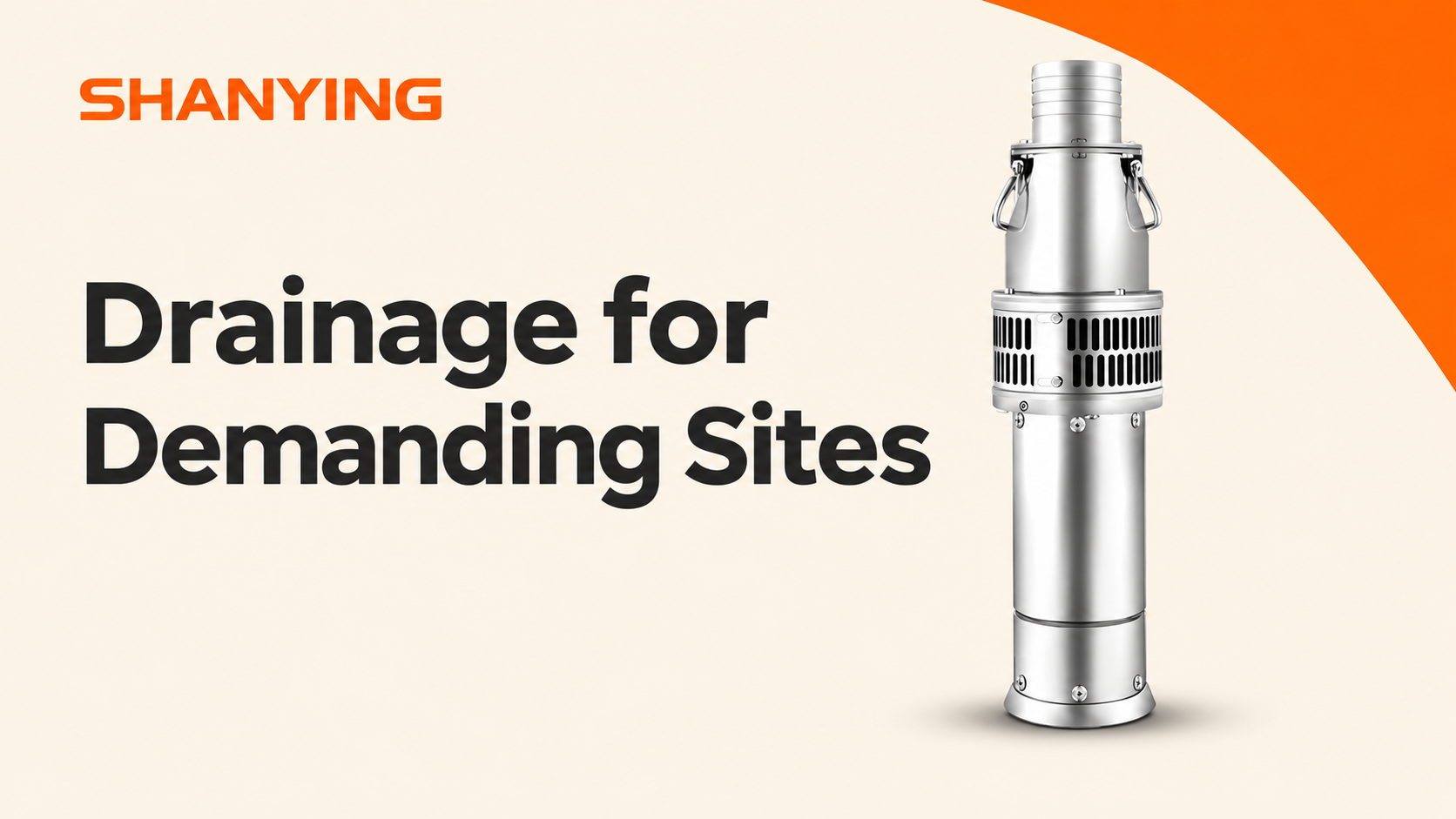
The choice becomes more meaningful when the product features are connected to the work. Shanying's QY-S portable submersible pump combines a permanent magnet motor, variable frequency technology and an oil-immersed motor structure. These features give buyers a specific platform to assess for drainage projects, rather than selecting solely by the appearance of a stainless steel housing.
From accumulated water to a defined drainage duty
Site drainage begins with the volume of water that must be moved and the destination it must reach. A shallow collection area beside a nearby discharge point is different from a deeper excavation connected to a long delivery pipe. Both involve drainage, but the pump may face very different flow and head requirements.
A submersible arrangement places the pumping unit in the water source. This can suit collection areas where the water is already below the working level. The relevant question is whether the selected model can work within the expected water levels and liquid conditions while delivering the required output.
Temporary water transfer is another application to assess. A project may need to move collected water to storage or an approved discharge location. The suitability of that water, the receiving system and any discharge requirements should be established as part of the project, rather than assumed from the pump category.
What the QY-S product design brings to the discussion
The QY-S permanent magnet variable frequency portable submersible pump provides a real product reference for this type of selection. Its motor and control concept are relevant where buyers want to assess a drainage unit with speed-control capability. The supplied controller, permitted operating range and complete package should be confirmed for the proposed model.
A permanent magnet motor uses permanent magnets in its rotor. Variable frequency control can regulate motor speed within the designed operating range. For drainage buyers, the potential value is the ability to evaluate pump operation against changing demand. Actual efficiency and control performance depend on the complete pump, controller and duty; they should be supported by model-specific information.
The oil-immersed motor description identifies the motor construction. It should not be read as a statement that the pump is approved to transfer oil. The pumped liquid remains a separate selection issue, particularly where the collected water may contain sediment or substances from site activities.
Three application questions that shape the selection
| Application | Useful product consideration | Information needed |
|---|---|---|
| Temporary site drainage | Submerged pumping and movement between duties | Water quality, inflow and required discharge rate |
| Transfer to a higher receiving point | Flow available at the required head | Elevation difference and delivery-system losses |
| Changing drainage demand | Permitted speed-control operation | Duty range and supplied control arrangement |
The table describes applications to review, not unconditional approvals. A pump intended for drainage is not automatically suitable for heavily abrasive slurry, chemicals or sewage containing difficult debris. Those conditions may call for a different hydraulic design or a more specific material assessment.
Stainless steel is a material choice with a purpose
Stainless steel construction can be relevant to water handling where the exposure conditions justify it. Buyers should establish which components use stainless steel and which grades are supplied. The visible shell does not establish the material of the impeller, shaft, seals or every wetted part.
Describe the liquid temperature, suspended matter and any chemical exposure expected during normal operation. If the water changes as the work progresses, include those changes in the selection brief. A pump chosen for relatively clean accumulated water should not quietly become the default for a much more demanding liquid.
This approach gives material selection a practical role: matching the construction to the environment. It avoids broad claims that stainless steel makes a pump immune to corrosion or wear, while still explaining why the construction matters to buyers.
Compare performance at the working point
Head and flow belong together when assessing a drainage pump. Maximum flow describes one performance limit; maximum head describes another. They do not establish how much water the pump delivers at the project's required head. Use the applicable performance curve to locate the intended duty.
For a variable frequency product, request the relevant speed or frequency conditions as well. A comparison between two pumps is meaningful only when the supply version, operating condition and test basis are understood. Motor power alone does not tell the buyer which unit provides the better fit.
- Define the normal and peak drainage requirement.
- Establish the total head for the delivery route.
- Describe the actual liquid and expected solids.
- Review the proposed pump curve and permitted duty range.
- Confirm the pump, controller and required accessories as one package.
A product-led choice for drainage projects
Handling arrangements, electrical suitability and service access still matter, but they follow the central selection: a pump that suits the liquid and hydraulic duty. Portable does not mean that every unit can be handled manually; use the confirmed weight and designated handling provisions when planning movement between locations.
For buyers considering the QY-S range, a useful enquiry brings together the application, required flow, total head and water conditions. Shanying can then be asked to propose a specific configuration with supporting performance information. That keeps the discussion focused on what the product is intended to achieve in the project, with the purchasing decision tied to a defined drainage task.
Contact Us
Your email address will not be published. Required field are marked*


- Tel: +86-0576-89933666
- Mob: +86-18608118888
- FAX: +86-0576-89933668
- Email: [email protected]
- Add: Building 13, Zeguo Electronmechaical Entrepreneurship Park, Wenling City, Zhejiang Province, China
Please contact us and look forward to happy cooperation with you.
Copyright © Taizhou Shanying Pump Co., Ltd. All Rights Reserved.
 China Pump Supplier

