

 English
 中文简体
中文简体


Home · News · Industry News · How to Choose the Right Solar Submersible Pump
Industry News
How to Choose the Right Solar Submersible Pump
2026-08-04How to Choose the Right Solar Submersible Pump
A Complete Guide for Efficient and Reliable Water Supply
As solar energy continues to transform agricultural irrigation, livestock watering, and remote water supply, solar submersible pumps have become an increasingly popular solution. They provide clean, cost-effective, and sustainable water without relying on the electrical grid.
However, choosing the right solar submersible pump is not simply about selecting the highest power or the largest flow rate. The right pump should match your specific application, ensuring reliable performance, lower operating costs, and a longer service life.
This guide explains the key factors to consider before purchasing a solar submersible pump.
1. Identify Your Water Source
The first step is understanding where the water comes from.
Different applications require different pump configurations.
Typical water sources include:
- Deep boreholes
- Wells
- Reservoirs
- Rivers
- Lakes
- Water storage tanks
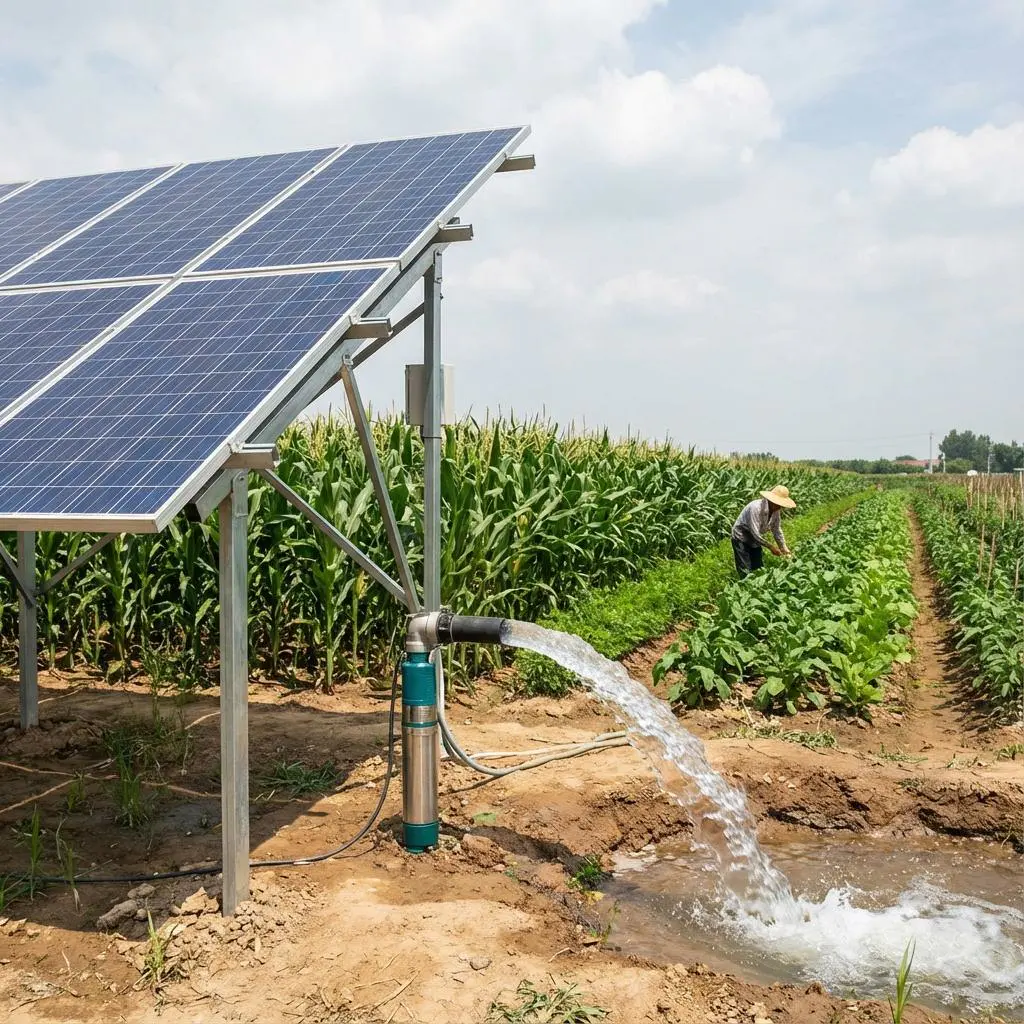 For deep boreholes, a multi-stage solar submersible pump is generally recommended to achieve higher pressure and stable performance.
2. Calculate the Required Head
Pump head is one of the most important specifications.
The total dynamic head (TDH) includes:
- Vertical lifting height
- Pipeline friction loss
- Required outlet pressure
Choosing a pump with insufficient head may result in poor water delivery, while selecting an oversized pump can increase system costs unnecessarily.
Always calculate the total working head before selecting a model.
3. Determine the Required Flow Rate
Flow rate refers to the amount of water the pump delivers within a specific period.
The required flow depends on your application.
For example:
- Drip irrigation
- Sprinkler irrigation
- Livestock watering
- Domestic water supply
- Water storage systems
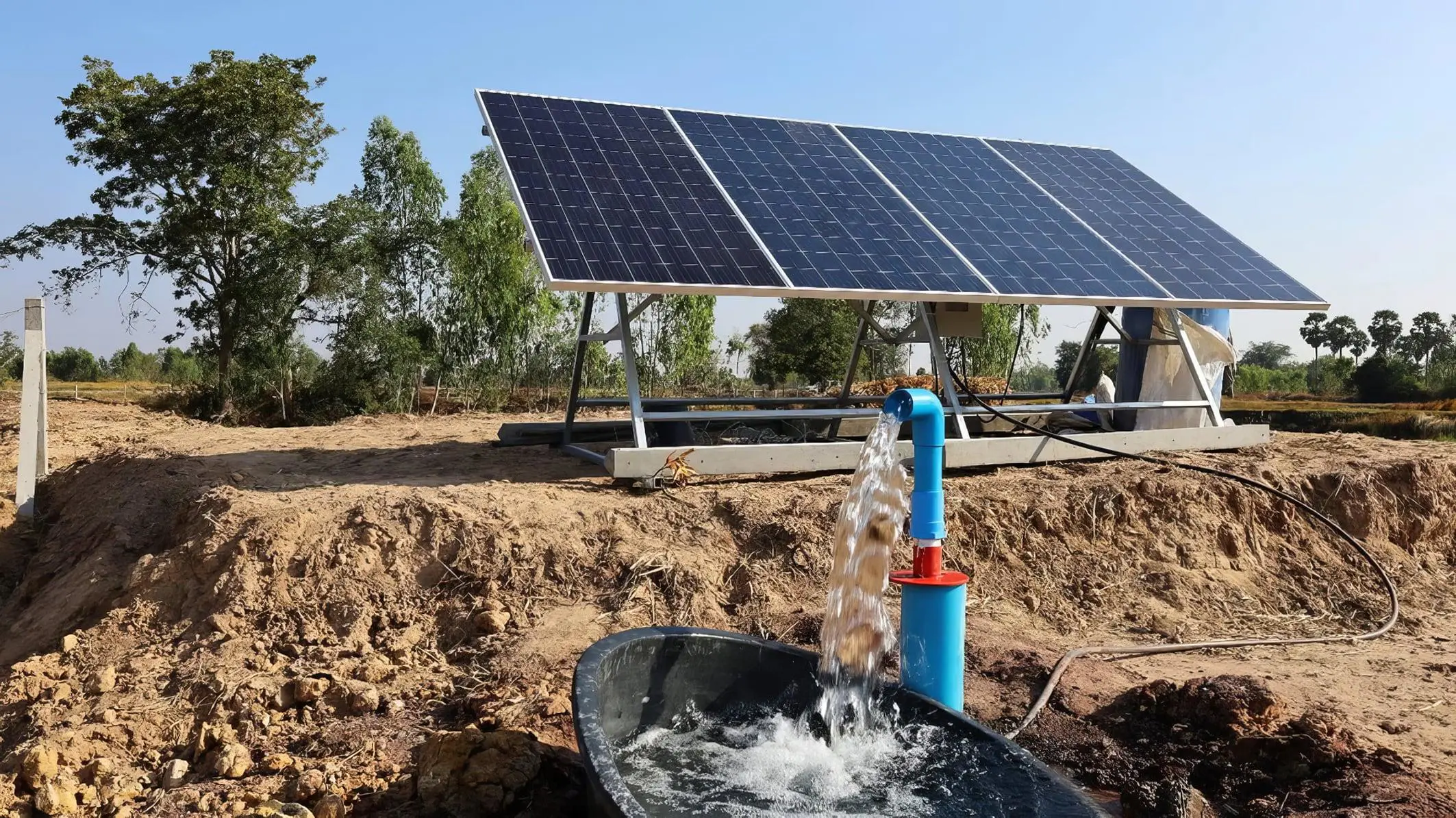 Matching the pump's flow rate to actual demand improves both efficiency and energy utilization.
4. Match the Solar Power System
A solar submersible pump performs best when properly matched with the photovoltaic system.
Consider:
- Solar panel capacity
- Pump voltage
- Motor power
- Controller specifications
- Daily sunlight hours
A well-designed system maximizes water output while minimizing energy loss.
For enhanced performance, many systems use MPPT (Maximum Power Point Tracking) controllers to optimize solar energy conversion under changing weather conditions.
5. Choose Durable Materials
Solar pumps often operate in harsh outdoor environments.
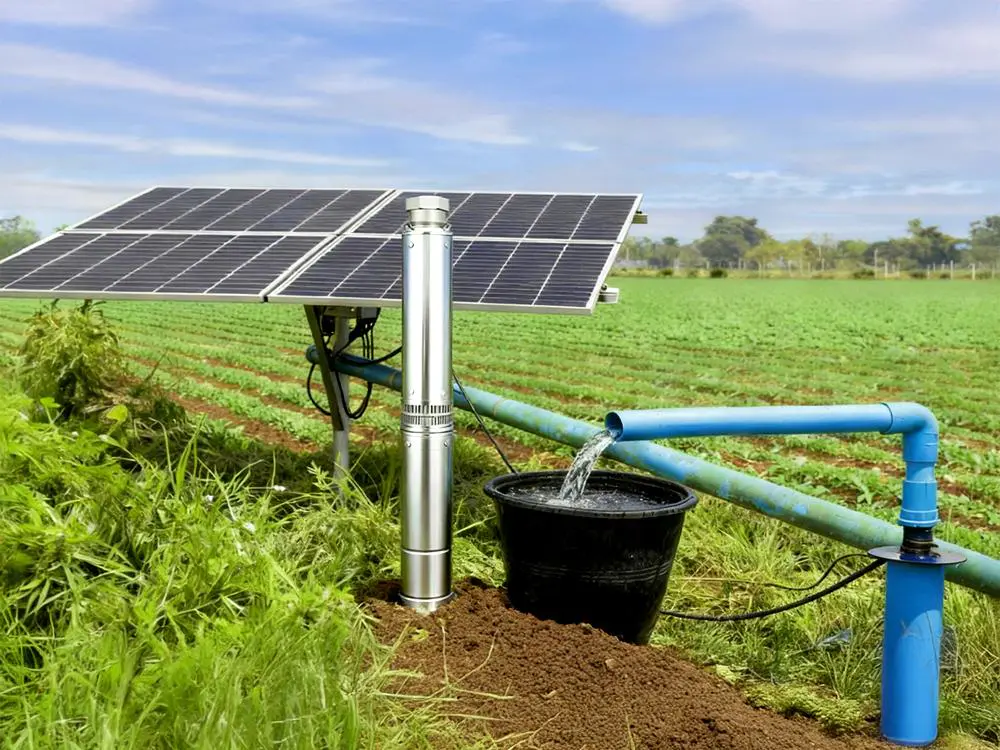
Selecting corrosion-resistant materials helps extend service life.
Important components include:
- Stainless steel pump body
- High-quality shaft
- Wear-resistant impellers
- Reliable mechanical seals
Durable materials reduce maintenance requirements and improve long-term reliability.
 6. 6.Consider Water Quality
Water conditions have a significant impact on pump performance.
Before choosing a pump, evaluate:
- Sand content
- Sediment levels
- Water temperature
- Corrosive substances
For wells containing sand or fine particles, selecting a pump specifically designed for abrasive conditions can significantly improve durability.
7. Evaluate the Controller Features
The controller is the "brain" of a solar pumping system.
Modern controllers may include:
- MPPT technology
- Dry-run protection
- Over-voltage protection
- Low-voltage protection
- Over-current protection
- Soft start
- Automatic restart
These features help protect the pump while ensuring reliable daily operation.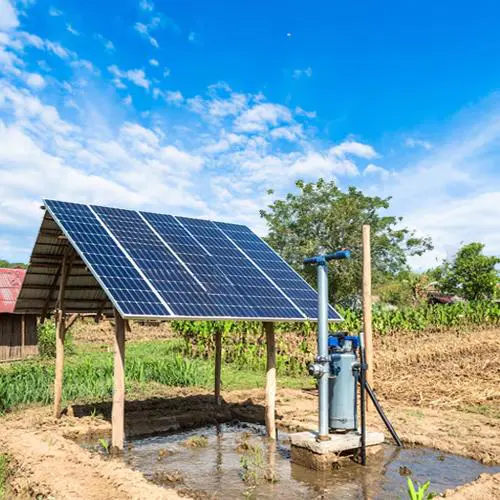
8. Choose a Reliable Manufacturer
The performance of a solar pumping system depends not only on product specifications but also on manufacturing quality and technical support.
When selecting a supplier, consider:
- Manufacturing experience
- Quality control system
- OEM & ODM capability
- Product testing procedures
- After-sales service
- Global export experience
A professional manufacturer can provide product recommendations, technical guidance, and customized solutions for different markets.
Why Choose SHANYING Solar Submersible Pumps?
With more than 30 years of manufacturing experience, SHANYING is committed to delivering reliable and efficient water pumping solutions for customers worldwide.
Our solar submersible pumps are designed to provide dependable performance for:
- Agricultural irrigation
- Borehole water supply
- Livestock watering
- Rural water systems
- Remote off-grid applications
SHANYING Advantages
- High-efficiency brushless motor
- Intelligent MPPT controller compatibility
- Stainless steel construction
- Reliable performance under demanding conditions
- Strict quality inspection before shipment
- Flexible OEM & ODM customization
- Professional export support
Whether you are a distributor, wholesaler, contractor, or project supplier, SHANYING offers customized solar pumping solutions to meet your business needs.
Conclusion
Choosing the right solar submersible pump requires careful consideration of water source, head, flow rate, solar power configuration, material quality, and system protection.
A properly selected pump not only improves efficiency but also reduces maintenance costs and ensures long-term, reliable water supply.
If you are looking for a trusted OEM & ODM manufacturer of solar water pumps, SHANYING is ready to help you build efficient and sustainable pumping solutions for your market.
Contact SHANYING
Looking for the right solar pumping solution?
Our engineering and sales teams are ready to help you select the ideal pump for your application.
Contact SHANYING today to discuss your OEM, ODM, or distribution opportunities.
Contact Us
Your email address will not be published. Required field are marked*


- Tel: +86-0576-89933666
- Mob: +86-18608118888
- FAX: +86-0576-89933668
- Email: [email protected]
- Add: Building 13, Zeguo Electronmechaical Entrepreneurship Park, Wenling City, Zhejiang Province, China
Please contact us and look forward to happy cooperation with you.
Copyright © Taizhou Shanying Pump Co., Ltd. All Rights Reserved.
 China Pump Supplier

